Gear Review · Boots
The Best Hiking Boots of 2026, Tested Over 400 Miles
We laced up five boots that showed up everywhere this year and put them through granite scramble, trail mud, and an early snow squall. One pair pulled ahead and stayed there.
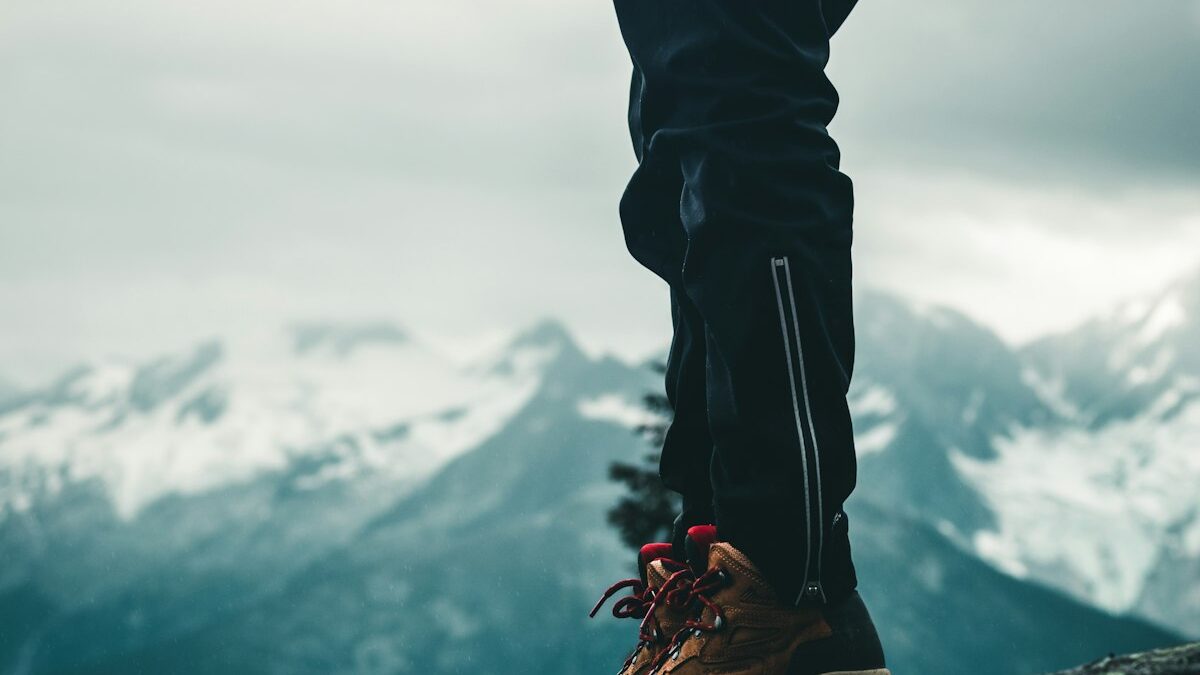
Every boot on this list showed up in our trip reports, our group chats, and the comment section under last year's roundup, so we bought all five at retail and ran them through the same 400-mile block: the Wind River high country, a wet week on the Olympic coast, and the first snow squall of the season on a ridge above 9,000 feet. No loaners, no early-release samples, no boots that went back to the brand before the miles added up.
Three testers rotated through all five pairs, logging mileage, blister counts, and break-in time in a shared spreadsheet we've been keeping since 2022. We cared about four things: how the boot handled loose talus and wet granite, how much it weighed after it got wet, how it felt on mile 11 of a 14-mile day, and whether the price made sense next to what you actually got.
How We Tested
Each boot got at least 80 miles before we wrote a word about it. That included a 22-mile overnight with a 32-pound pack, a river-crossing day where every pair got soaked and had to dry on the trail, and a scramble up a scree field that punishes stiff soles and rewards a good rock plate. We tracked lace durability, eyelet wear, and whether the waterproof membrane was still doing its job in week six.
We also sized every boot a half-size up from each tester's street shoe, which is standard advice from bootfitters but one a lot of buyers skip. Two of the five boots ran narrow enough that we'd recommend sizing up a full size for wide feet, and we've noted that below.
Weight, Price, and Score at a Glance
Here's how all five stacked up once the testing block closed out. Scores are out of 10 and weigh traction, support, weather resistance, break-in time, and value equally.
| Boot | Weight (per boot) | Price | Score | |
|---|---|---|---|---|
| Salomon Quest 4 GTX | 1 lb 6 oz | $230 | 9.2 | Buy |
| La Sportiva Nucleo High II GTX | 1 lb 7 oz | $219 | 8.9 | Buy |
| Merrell Moab 3 Mid WP | 1 lb 3 oz | $140 | 8.6 | Buy |
| Oboz Bridger 10″ Insulated | 1 lb 10 oz | $200 | 8.4 | Buy |
| Altra Lone Peak ALL-WTHR Mid 2 | 1 lb 2 oz | $175 | 8.1 | Buy |
Salomon Quest 4 GTX — Best Overall
The Quest 4 won because it didn't ask us to choose between support and comfort. The ankle collar is tall enough to matter on a loaded overnight pack, the midsole is stiff enough for a scree field, and it still felt broken-in on day one in a way none of the other boots managed. The Gore-Tex membrane shrugged off the river crossing and the snow squall without a single tester reporting a wet sock.
It's also the most expensive boot here, and the Contagrip outsole runs about a half-size small, so order up. If you've got narrow heels, the internal heel cup locks down well enough that you won't need an aftermarket insole, which saved one of our testers $40 she'd budgeted for orthotics.
La Sportiva Nucleo High II GTX — Best for Rocky Terrain
If your trails skew toward talus and exposed granite more than mud and roots, the Nucleo is the boot to own. The rock plate is the stiffest of the five, which made it the clear favorite on the scree field day, but that same stiffness made the first 20 miles genuinely uncomfortable. Budget a real break-in period before you trust this boot on a long day.
It runs true to size, which is unusual for an Italian-made mountain boot, and the toe box held up to repeated rock strikes without a scuff showing through after 90 miles.
Merrell Moab 3 Mid WP — Best Value
The Moab has been a trail staple for a reason, and the 3rd generation doesn't mess with the formula much. At $140 it's $90 cheaper than the Quest 4 and still scored within half a point on our overall rubric, mostly because the out-of-box comfort is the best of any boot we tested — testers reported zero hot spots in the first ten miles, which almost never happens.
Where it loses ground is long-term support. By mile 300, the midsole had noticeably softened, and one tester felt it under a 35-pound pack on a rocky descent. For day hikes and lighter overnights, that tradeoff is easy to make.
Oboz Bridger 10″ Insulated — Best for Cold and Wet
The only boot in this group built with an insulated liner, and it showed during the snow squall: warmest feet of the five testers, no contest. The tradeoff is weight and a longer break-in than the Moab or the Quest 4. If you're hiking shoulder season into early winter, or you run cold, this is the pick. If you're mostly a three-season hiker, the insulation is dead weight you're carrying for no reason.
Altra Lone Peak ALL-WTHR Mid 2 — Best Zero-Drop
The lightest boot here by four ounces, and the only zero-drop option, which matters if you've trained your gait around a flatter platform or you're managing plantar fasciitis. Testers with zero-drop trail runners in regular rotation adapted to it in under a day; testers used to a traditional heel lift found the first few miles disorienting.
The tradeoff for that low weight is a thinner rock plate — the one boot here where a sharp rock on the scree field was actually felt through the sole. If your trails are mostly maintained and you want to move fast, that's a fair trade. If you're off-trail often, it isn't.
"The boot that won wasn't the one that impressed us on day one. It was the one none of us were still thinking about by day forty." Keiko Thaler, Gear Editor
Which Boot Should You Buy
For most hikers doing a mix of day hikes and multi-day trips on varied terrain, the Salomon Quest 4 GTX is the boot we'd buy with our own money again — it's the only pair that scored above an 8.5 in every category we track. If $230 is more than you want to spend and your trips stay under 10 miles, the Merrell Moab 3 gets you 90% of the comfort for 60% of the price. And if you're hiking into snow more often than not, skip straight to the Oboz.