Trip Planning · Packing
A Weekend Backpacking Packing List
Two nights, one trailhead, no resupply. This is the exact list we check against before every weekend trip, with quantities, so nothing gets left in the garage.
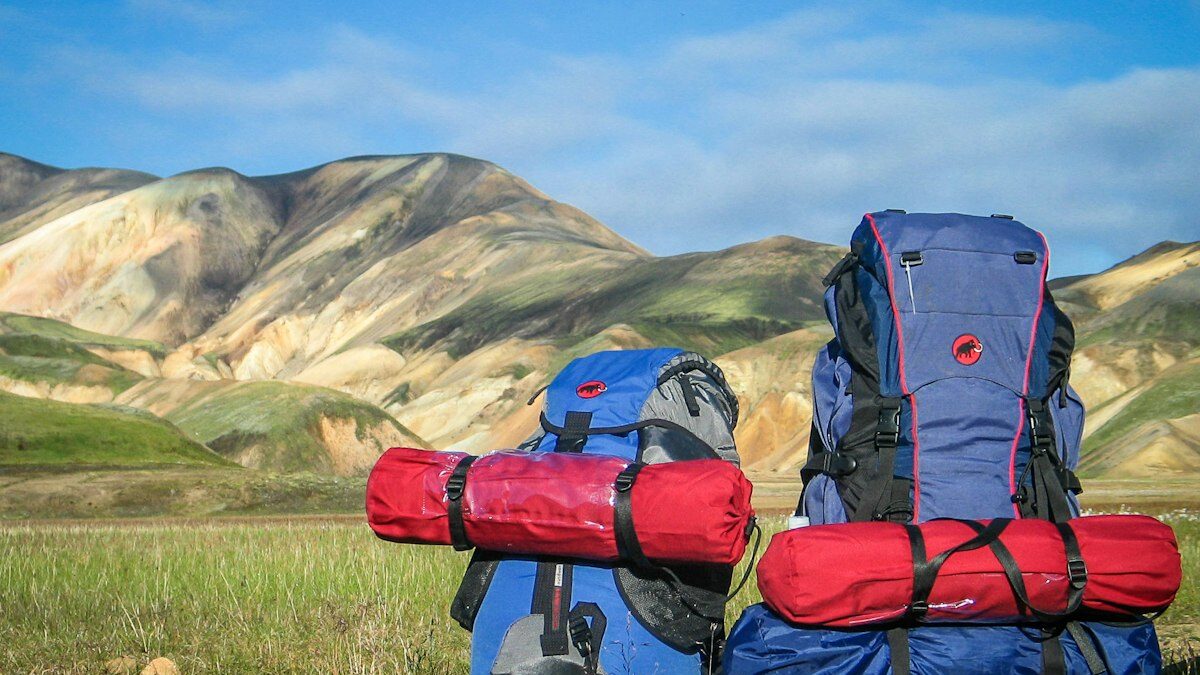
Most packing lists online are either too generic to be useful or so exhaustive they're more work to read than to pack from. This is the list we actually run through before a standard two-night, three-day weekend trip — roughly 15–20 miles total, one basecamp or one-move itinerary, no resupply, three-season conditions. Adjust the clothing and shelter sections for winter or desert trips, but the core list below doesn't change much trip to trip.
Start With the Big Three
Your tent, sleeping bag, and backpack set the weight budget for everything else, so get these right before you worry about the smaller stuff. Together they should land between 6 and 9 pounds for a two-person three-season setup split across two packs. If your big three alone is pushing 12 pounds, that's where your base weight problem actually lives, not in your stuff sack of cookware.
Packing List
- Tent (2-person, with stakes and guylines)1
- Sleeping bag, 20°F rating1 per person
- Sleeping pad1 per person
- Backpacking stove1
- Fuel canister, 8 oz1
- Cook pot with lid, 900 ml–1 L1
- Spork or long-handled spoon1 per person
- Water filter (squeeze or gravity)1
- Water bottles or soft flasks, 1 L2 per person
- Headlamp with spare batteries1 per person
- First-aid kit1
- Map and compass (or offline GPS app)1 set
- Multi-tool or knife1
- Firestarter (lighter plus backup matches)1 set
- Trowel and toilet paper, sealed bag1 kit
- Bear canister or food-hang kit (where required)1
- Rain shell, jacket and pants1 per person
- Insulated layer (fleece or synthetic puffy)1 per person
- Base layer top and bottom for sleeping1 set per person
- Hiking socks, wool or synthetic3 pairs per person
- Sun hat and sunglasses1 each
- Sunscreen and lip balm with SPF1 each
- Insect repellent (season-dependent)1
- Dry bags or pack liner2–3
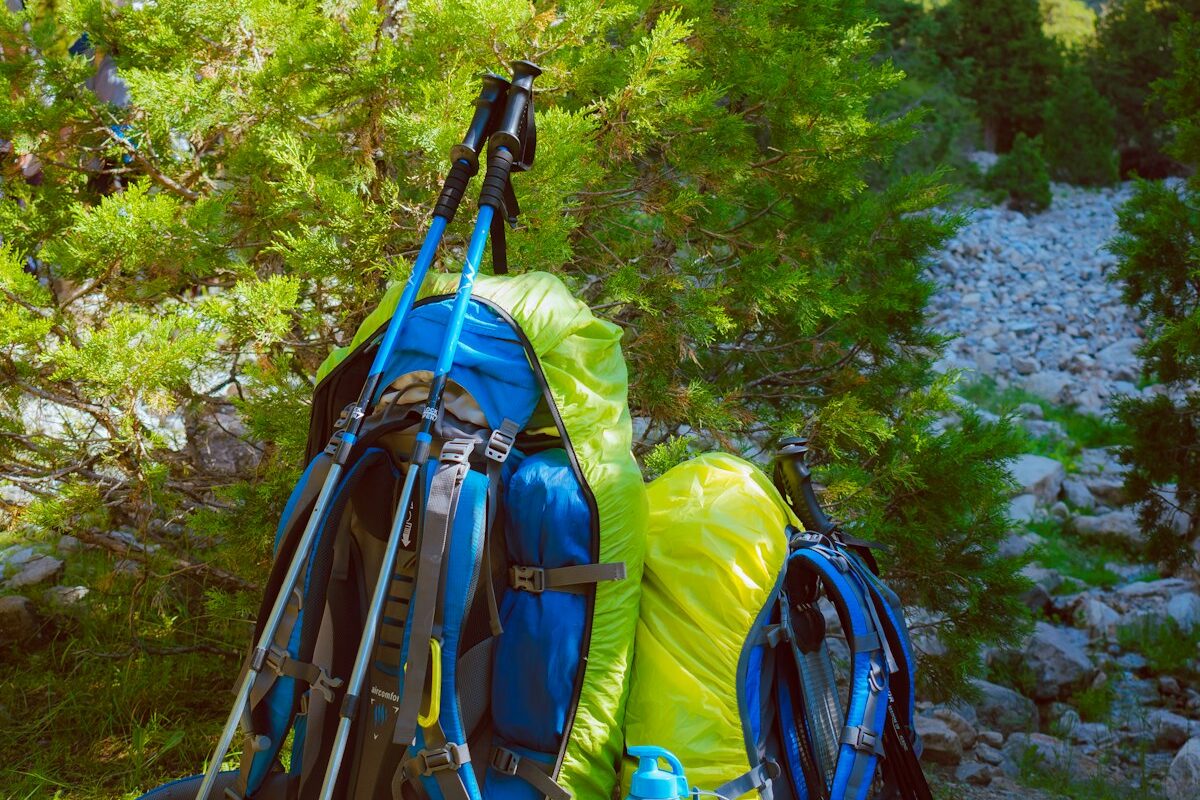
- Trekking poles1 pair per person
- Permit or reservation confirmation, printed1
That list covers gear, not food, which we handle separately below since it scales with trip length rather than being a fixed quantity.
Food and Water for Two Nights
We plan on roughly 2,500–3,000 calories per person per day on a weekend trip, which works out to about 1.5 pounds of food per person per day once you're buying calorie-dense backpacking meals rather than trail mix and granola bars alone. For a two-night trip, that's six meals (two dinners, two breakfasts, lunch for the two full days) plus snacks to graze on while hiking.
Water is trip-dependent, but as a baseline we carry enough capacity to hold 2 liters at any time and filter from natural sources rather than carrying it all — a squeeze filter rated for at least 1,000 liters covers a season of weekend trips before the cartridge needs replacing.
What We Leave Behind
The fastest way to cut pack weight isn't buying lighter versions of everything you already carry — it's leaving things home that don't earn their weight on a two-night trip. We don't carry a second pair of camp shoes (hiking boots or trail runners do fine around camp), a full-size pillow (a stuff sack of clothes works), paperback books, or a second stove fuel canister "just in case" — one 8 oz canister comfortably covers six to eight meals for two people if you're not melting snow.
- Camp chairs, unless car camping or basecamping with minimal hiking
- Cotton clothing of any kind — it stays wet and doesn't insulate once damp
- A full tool kit when a compact multi-tool covers the same repairs
- Duplicate electronics — one headlamp and one phone is enough backup for most weekend trips
A Note on Pack Weight
A reasonable target for a three-season weekend trip is a base weight (everything except food, water, and fuel) of 15–20 pounds for someone using mid-weight gear, or under 10 pounds if you've invested in an ultralight big three. Add food and water and most weekend packs land between 25 and 35 pounds fully loaded. If you're consistently over 40, the big three is almost always where the excess weight is hiding, not the small stuff.
"Weigh your pack before the trip, not on the trail when your shoulders are already telling you something's wrong." Jonah Websley, Trip Planning Editor
Clothing Layers That Actually Earn Their Spot
For a standard three-season weekend, we pack three layers and resist adding a fourth: a moisture-wicking base layer, an insulating mid-layer, and a waterproof-breathable shell. That combination handles everything from a cold morning start to an afternoon thunderstorm without carrying redundant warmth. The one addition worth considering above 8,000 feet or in shoulder season is a lightweight puffy you can wear under the shell, which weighs almost nothing packed down and makes the difference on a cold camp night.
Adjusting the List by Season
This list assumes a fair-weather three-season weekend, and it shifts more than people expect once you move outside that window. In shoulder season — late fall or early spring — we swap the 20°F bag for a 10°F to 15°F bag, add a second insulating layer, and bump the fuel canister up if we're melting any snow for water rather than filtering from a running creek. In true winter conditions, the list changes enough that it's closer to a separate trip entirely: a four-season tent capable of handling real snow load, a sleeping pad with a higher R-value layered over a closed-cell foam pad underneath it, and traction devices for icy approach trails.
On the hot end, desert or late-summer low-elevation trips trade some of the insulation weight for more water-carrying capacity and more aggressive sun protection — we'll often carry 3 to 4 liters of capacity instead of 2, plus a sun umbrella for exposed stretches, which sounds like a gimmick until you've hiked a shadeless ridge at 2 p.m. in August with one.
The constant across every season is the same instinct: check the list against the actual forecast and terrain for your specific trip, not against last month's trip or a generic seasonal template. The gear that earns its weight changes with the conditions; the discipline of checking before you leave doesn't.