Journal · Essay
Why I Stopped Counting Summits
Forty-six peaks into a list I'd kept for six years, I stood on a summit in a whiteout and realized the number had stopped telling me anything true about why I was there.
I kept a spreadsheet. Column A was the peak name, column B was the date, column C was elevation, and column D was a dropdown I'd built myself with values like "clear," "socked in," and "turned back, try again." By the time I stopped updating it, the sheet had forty-six rows, and I could tell you the exact day, six years and one month earlier, that I'd added the first one.
That first entry was Ferris Peak, a modest 9,100-footer with a trail to the summit block and a register in an ammo can, and I remember being disproportionately proud of writing it down. Somewhere in the next forty-five entries, the pride stopped being about the mountain and started being about the row count. I didn't notice the shift happening. I only noticed it had already happened.
The List That Started It
I didn't set out to be a peak-bagger. I set out, like most people do, to get outside more and get better at being uncomfortable on purpose. The list came later, almost by accident, as a way to track progress — which is a reasonable thing to want, and tracking progress isn't the problem I eventually ran into. The problem was what the tracking quietly turned into once it had a few years of momentum behind it.
A list is supposed to serve the thing you're doing. Mine started doing the opposite: I began picking trips based on which peaks were still unchecked rather than which mountains I actually wanted to spend a day with. I turned down a repeat trip to a basin I genuinely loved, twice, because the peaks up there were already rows in the sheet and didn't move the count.
Peak 46, and the Day the Counting Stopped Meaning Anything
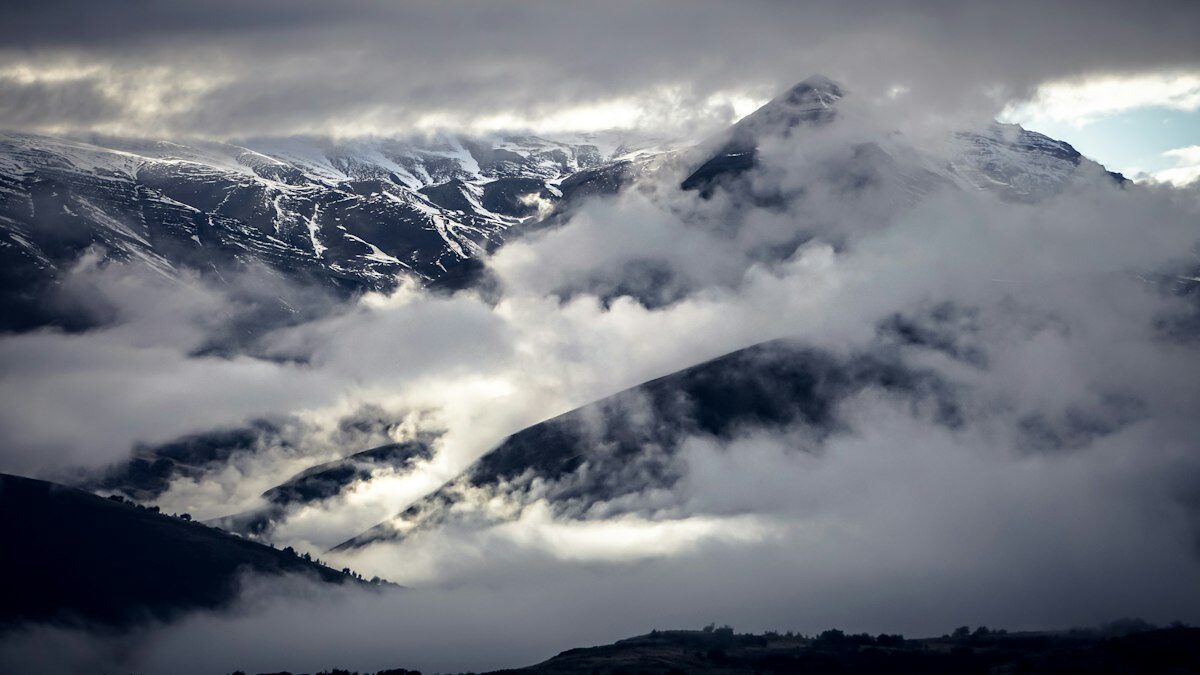
Row forty-six was Granite Needle, a peak I'd put off for two seasons because the approach was long and the weather window was narrow. I finally went in early October, later in the season than I should have, and got caught in a whiteout about 400 feet below the summit block. Visibility dropped to maybe thirty feet. The wind made it hard to hear my own hiking partner talking six feet away.
We made the summit — carefully, slowly, checking the map more than I usually need to on a peak that size — and I remember standing on top of Granite Needle unable to see anything at all except gray in every direction, reaching for my phone to log the summit, and just... not doing it. Not out of some profound realization in the moment. I was cold and tired and the gesture suddenly felt beside the point in a way I couldn't immediately explain.
What I Was Actually Chasing
It took me most of the hike down to figure out what had actually happened on that summit. I hadn't stopped caring about the mountain. I'd stopped caring about this particular mountain, specifically, because by peak forty-something the list had trained me to experience each new summit mostly as a data point confirming I was still making progress on the list. The actual granite under my boots, the specific quality of light, the particular way the wind moved through that whiteout — all of that had become background noise to the real event, which was updating column A.
That's a strange thing to admit, because on paper I was doing exactly what I'd set out to do six years earlier: getting outside, getting uncomfortable, learning terrain and weather and my own limits. The list hadn't corrupted the activity. It had just quietly become the point of the activity, and once I saw that clearly, I couldn't unsee it.
The Mountains Don't Know the Number
Granite Needle doesn't care that it was summit forty-six. Neither did Ferris Peak, six years earlier, care that it was summit one. The number is entirely a thing I built for myself, useful for a while in the way a training log is useful, and then not useful anymore once it started making decisions for me that I wasn't making consciously. I think that's the part worth saying plainly, because peak-bagging gets talked about either as an unambiguous good (it gets people outside, it builds real skill, both true) or dismissed as checklist tourism (also sometimes true), and neither framing captures what actually happened to me, which is slower and less dramatic than either.
The list didn't ruin hiking for me. It just stopped being honest about what I was doing up there, and I'd rather hike dishonestly for zero years than six more.
"The list didn't ruin hiking for me. It just stopped being honest about what I was doing up there." Callum Hart
What Replaced the List
I haven't stopped climbing things. I climbed four peaks this year, which is fewer than my six-year average, and I couldn't tell you all four elevations off the top of my head anymore, which would have bothered me two years ago and doesn't now. What changed is the decision process before a trip: I ask whether I want to spend a day with that specific mountain, in that specific season, with whoever I'm going with, and the unchecked-box feeling doesn't get a vote anymore.
I went back to that basin I'd skipped twice. I went back a third time this spring, on a peak that was already in the spreadsheet, logged years ago, contributing nothing to any number that still mattered to me. It was one of the better days I've had on a mountain in years.
The One Stat I Kept
I didn't delete the spreadsheet. I still open it occasionally, mostly as a trip-log, a record of where I was and when, which is a genuinely useful thing a list can be. I just stopped treating the row count as a verdict on the year. The only number I track with any real attention now is simpler and less legible to anyone but me: days spent outside, no ranking required, no peak worth more than any other peak just because it was harder to get to.